Why Factory Audio Underdelivers
Automakers balance dozens of priorities when building a vehicle. Audio quality rarely makes the top of that list for most trim levels. Factory speakers are often made from pressed paper cones and basic voice coils that distort easily at even moderate volume. Factory head units limit output to protect those weak speakers, and bass is mostly an afterthought. Upgrading these components unlocks the full potential of your music.
The Recommended Upgrade Order
Step 1 — Upgrade Your Speakers First
Your speakers are the single component that has the most impact on sound quality. Even driven by modest factory power, a good set of aftermarket component or coaxial speakers will sound noticeably cleaner and more detailed than the originals.
- Coaxial (full-range) speakers — Woofer and tweeter built into one unit. Easy drop-in replacement, ideal for budget builds or rear fill.
- Component speakers — Separate woofer, tweeter, and crossover for better staging and more precise sound. Best for front stage performance.
Look for speakers with a sensitivity rating above 88 dB. Confirm the speaker diameter matches your vehicle’s factory mounting locations (common sizes: 6.5", 5.25", 6x9"). Check product pages or contact us to confirm fitment for your specific vehicle.
Step 2 — Add a Subwoofer and Amplifier
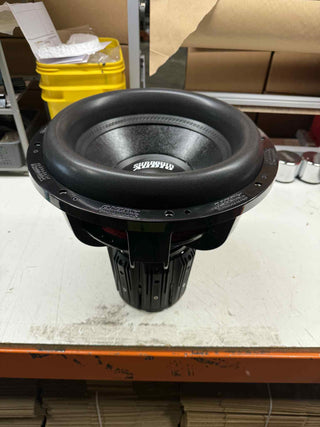
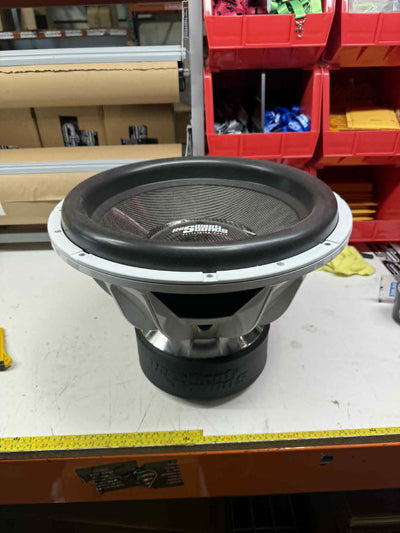
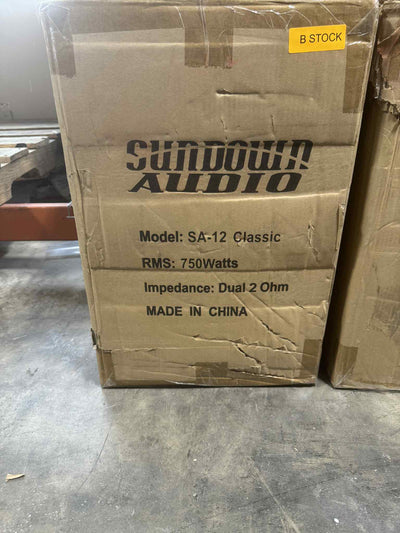
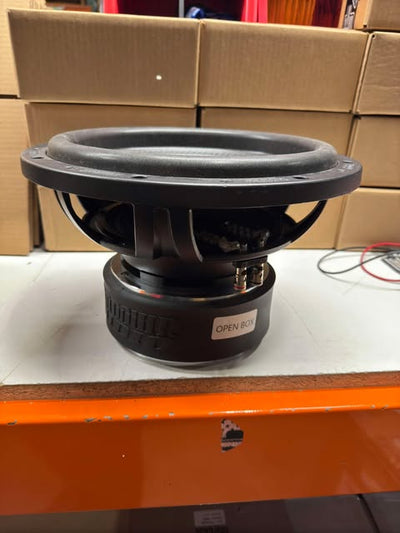
Factory speakers almost never reproduce bass below 80 Hz well. A subwoofer fills that gap and takes pressure off your door speakers to handle frequencies they were never designed for. For most vehicles, a powered subwoofer or a compact under-seat sub offers the easiest installation. See our guide on how to match a subwoofer to an amplifier. Shop our subwoofer collection and amplifier collection.
Step 3 — Add an Amplifier for Your Speakers
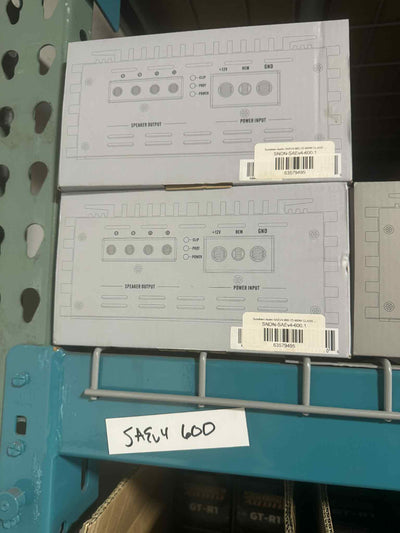
Even great aftermarket speakers are limited by a factory head unit’s built-in amplifier, which typically puts out 15–25W RMS per channel despite what the marketing numbers claim. Adding a dedicated 4-channel amplifier for your speakers unlocks their full rated power and reduces distortion. For most builds, a 4-channel or 5-channel amplifier gives you the most flexibility.
Step 4 — Upgrade the Head Unit (Optional but Powerful)
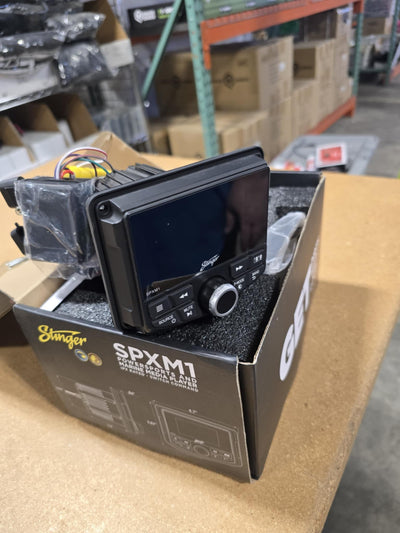
Aftermarket head units offer preamp outputs (RCA outputs), digital signal processing (DSP), Apple CarPlay / Android Auto, and a built-in equalizer. If your factory head unit has multiple RCA preamp outputs and at least 2V of output voltage, you may be able to skip this step. If it doesn’t have RCA outputs at all, consider a line output converter (LOC) as a bridge, or upgrade to an aftermarket deck.
Step 5 — Address Electrical and Sound Deadening
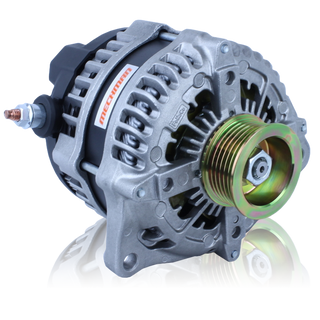
As your system grows in power, the electrical system needs to keep up. Read our full guide on battery and electrical upgrades for big bass to know when and how to upgrade. Sound deadening applied inside doors and panels reduces road noise, eliminates panel rattle from bass, and lets your speakers work in a more controlled acoustic environment.
Common Mistakes to Avoid
- Buying speakers before knowing your mounting dimensions. Always measure or verify fitment before ordering.
- Running a high-powered amp on undersized wire. Use the right gauge — see our wiring kit guide.
- Setting gain too high. Gain controls input sensitivity, not master volume. Setting it too high causes clipping and blown speakers.
- Skipping grounding. A poor chassis ground is one of the most common causes of noise (alternator whine) in car audio systems.
- Buying the loudest-rated sub without checking enclosure requirements. A great sub in the wrong box is a mediocre-sounding sub.
Need Help Planning Your Upgrade?
Contact Us for a System Recommendation →